
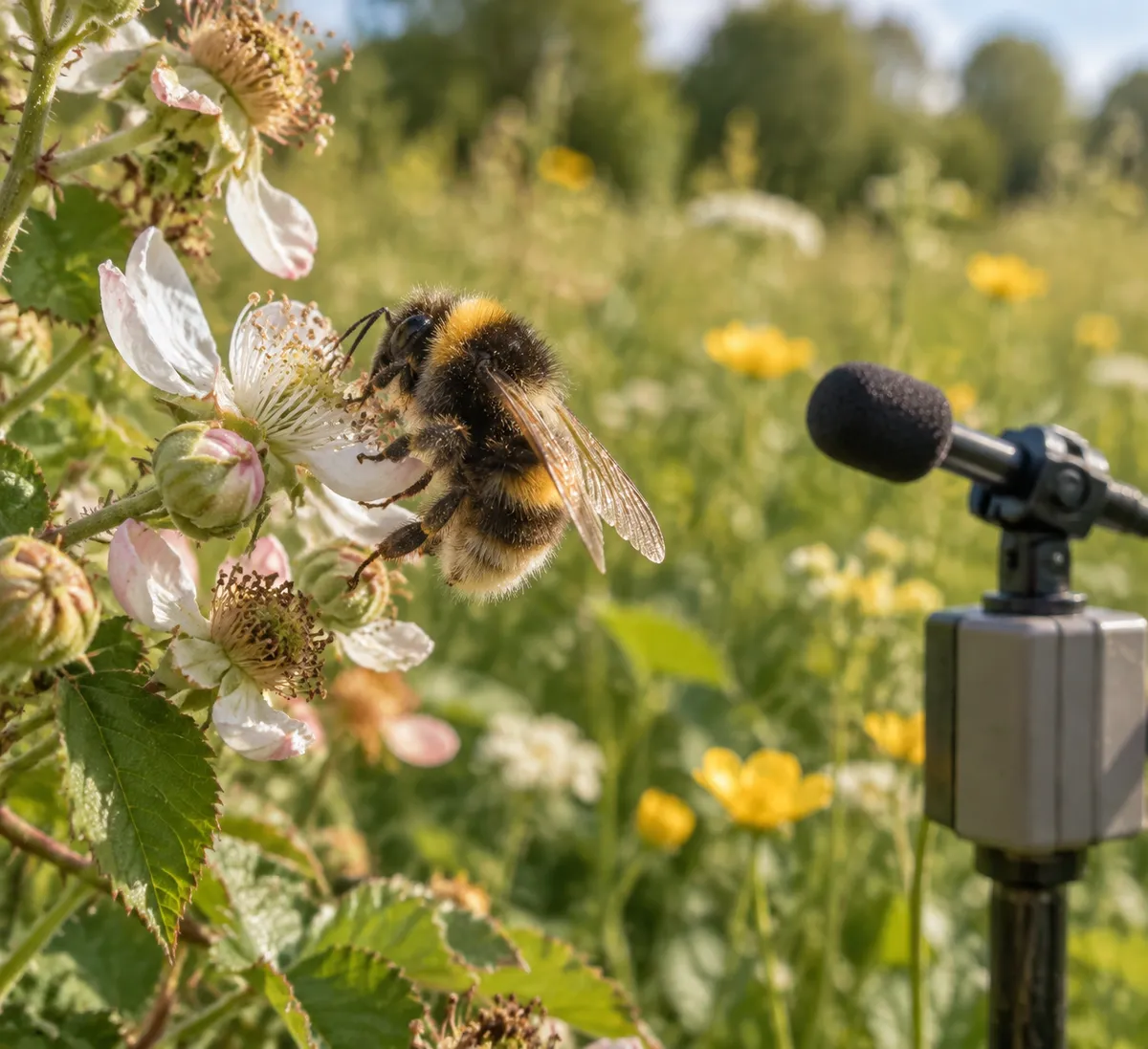
Researchers have trained AI models to recognize bee activity from sound alone, and to tell honeybees from bumblebees, using audio recorded in the field. Per Phys, which reported the work, the acoustic approach achieved high precision and can complement traditional pollinator surveys. By the end of this piece, you'll know how listening to a buzz can stand in for catching a bee, and what the approach can and can't do yet.
The problem: counting bees often means killing them
Populations of many pollinators, including bumblebees, have been crashing over the last few decades. Phys points to the widespread use of chemical pesticides, loss of habitat and the acceleration of climate change as drivers.
To protect pollinators, scientists need to know where they are and how active they are. Accurate monitoring is essential for conservation. But traditional surveys often rely on lethal traps, which is an uncomfortable irony: the tool meant to help conservation removes some of the animals it's trying to count.
The idea: treat the buzz as data
The researchers took a different route. Instead of capturing insects, they used field audio recordings and trained AI models to pick out bee activity in them. The models were also trained to separate honeybees from bumblebees.
Think of it like a bird-song app, but for pollinators. A flying bee produces a distinctive sound, and an AI model can learn patterns in that sound that a casual listener would miss. Once trained, it can scan recordings far faster than a person could.
What the results show
The headline finding, per Phys, is that the acoustic AI monitoring achieved high precision. That means that when the model flagged bee activity, or labeled a bee as one type, it was usually right.
Note the careful wording in the reporting: the method can complement traditional surveys. It isn't presented as a full replacement. Different methods answer different questions, and a recording of a buzz won't tell you everything a specimen in hand would.
Why this could scale
The appeal here is practical. According to the report, non-lethal AI tools offer a scalable way to track bee activity in hard-to-sample places and conditions.
That matters because pollinator surveys are limited by who can get where, and when. A recorder can keep listening in spots that are awkward to visit repeatedly. More coverage means a clearer picture of where pollinators are thriving and where they're struggling.
Why honeybee versus bumblebee matters
Lumping all bees together hides important detail. Honeybees and bumblebees are different groups, and bumblebees are among the pollinators the report highlights as declining. Being able to tell them apart from audio means a monitoring tool can say something more useful than "bees were here."
What this doesn't tell us yet
The summary of the work doesn't cover how the models perform across every habitat, season or noisy environment, or how many bee species they could eventually separate. Those are fair questions to watch for as the approach develops. Treat this as a promising tool, not a finished solution.
What you can take from it
This is a hopeful kind of AI story: technology helping scientists watch over bees without harming them. Animal sounds are increasingly becoming conservation data, and bees are a good test case because the stakes for food systems and ecosystems are high.
If you care about pollinators, the most useful step is to stay curious about how they're counted. Better monitoring is what lets conservation decisions rest on evidence, and listening may turn out to be one of the gentlest ways to get it.