
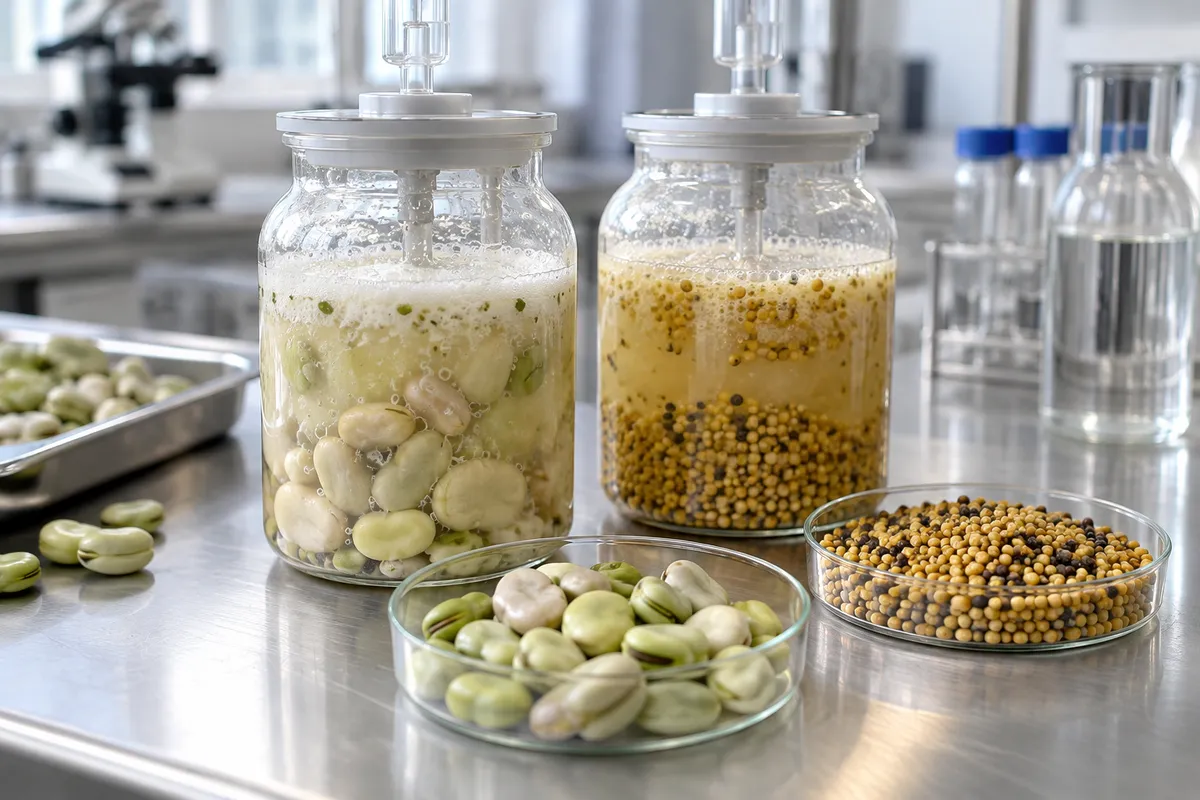
If you've ever wondered whether swapping animal protein for plants gives your body everything it needs, here's the short answer: not automatically. Plant proteins often fall short on certain essential amino acids. Researchers in Denmark now report a way to close that gap using bacteria, and you'll see below how it works and why it could matter for your plate and for livestock feed.
The news: two bacteria, a much better amino acid profile
Per Phys, researchers from the DTU National Food Institute and Aarhus University have developed a fermentation method that uses specific microorganisms to change the amino acid composition of plant-based foods and animal feed. The goal is to make them more nutritionally complete and more digestible.
The process has two stages and relies on two bacteria: Bacillus subtilis and Corynebacterium glutamicum. According to the report, it boosts essential amino acids such as lysine by 3 to 3.6 times in crops including faba beans and rapeseed.
Why "plant-based" doesn't always mean "complete"
Proteins are built from amino acids, and some of those are essential, meaning your body can't make them and you have to get them from food. Plant proteins often lack a complete profile of these. Lysine is one of the amino acids the researchers targeted, and it's a common weak point in plant sources.
That gap is easy to miss. A food can be high in protein on the label and still be unbalanced in the amino acids your body actually needs. Today, that imbalance is typically handled by eating a varied diet or by adding synthetic amino acid supplements, particularly in animal feed.
How the fermentation approach works
Fermentation is an old idea: let microorganisms work on food and change it. What's new here is the precision. Per the report, the researchers used the microbes to specifically alter the amino acid composition rather than just to preserve or flavor the food.
I can only tell you what was reported: a two-stage process, two named bacteria, and results of roughly three to three-and-a-half times more lysine in faba beans and rapeseed. Details beyond that, such as how each stage divides the work, how the products taste, or what it would cost at scale, weren't part of the coverage I had, so treat those as open questions.
One point worth highlighting: this approach is described as a natural solution, one that doesn't involve genetic modification of the crops themselves.
Why faba beans and rapeseed matter
These two crops are interesting because they can be grown in Europe. That makes them potential local alternatives to imported soy, which is a major protein source in animal feed. If fermentation can lift their nutritional quality, they become more competitive, and supply chains depend less on long-distance imports.
That's our analysis rather than a finding from the study, but it's a logical implication of the researchers' work: better local crops mean more options.
What it could mean for animals and the environment
According to the report, a more complete amino acid profile could reduce reliance on synthetic amino acid supplements. It could also help cut nitrogen pollution from overfeeding livestock. The logic is that when feed is short on one amino acid, farmers often add extra protein overall to compensate, and the surplus nitrogen ends up as waste. Feed that is balanced to begin with reduces that need.
This could be especially relevant for organic farming, where synthetic additives are limited. If the method delivers the right amino acids without them, it would address a real constraint.
What it could mean for people
Plant protein adoption is growing globally, and nutritional completeness is a particular concern in low-income countries, where diets may lean heavily on a few plant staples. Fermentation that improves amino acid balance could, in principle, make those foods more nourishing. Whether it can be made accessible and affordable in those settings is something the research alone doesn't settle.
What you can do with this now
You can't buy bacteria-boosted faba beans yet, as far as the reporting indicates. But the finding offers a practical lesson today:
- Don't assume a plant-based label means nutritionally complete. Check whether your diet includes a variety of protein sources across the week.
- Pay attention to lysine-poor staples if you rely heavily on a single grain or one plant protein.
- Watch for fermented plant proteins. If methods like this reach the market, they may become a way to get better nutrition from local crops.
The takeaway: when you move toward plant-based eating, vary your protein sources instead of trusting the label, and keep an eye on fermentation, which may soon make plant proteins work harder for you.