
"Take a probiotic" is the most common gut health advice around, and also one of the least useful on its own. A healthier microbiome is built mostly by everyday habits: what you put on your plate, what you drink, and how you sleep. This guide covers seven of them, drawn from a Women's Health roundup of science-backed ways to support your gut flora naturally, so you leave with things you can do this week.
Why bother? Per Women's Health, gut health matters for immunity, metabolism, longevity, and overall wellness. Research increasingly links the microbiome to inflammation, chronic disease risk, mood, and healthy aging. The source article presents these as lifestyle habits rather than a quick fix, and that framing is the useful part.
1. Eat produce
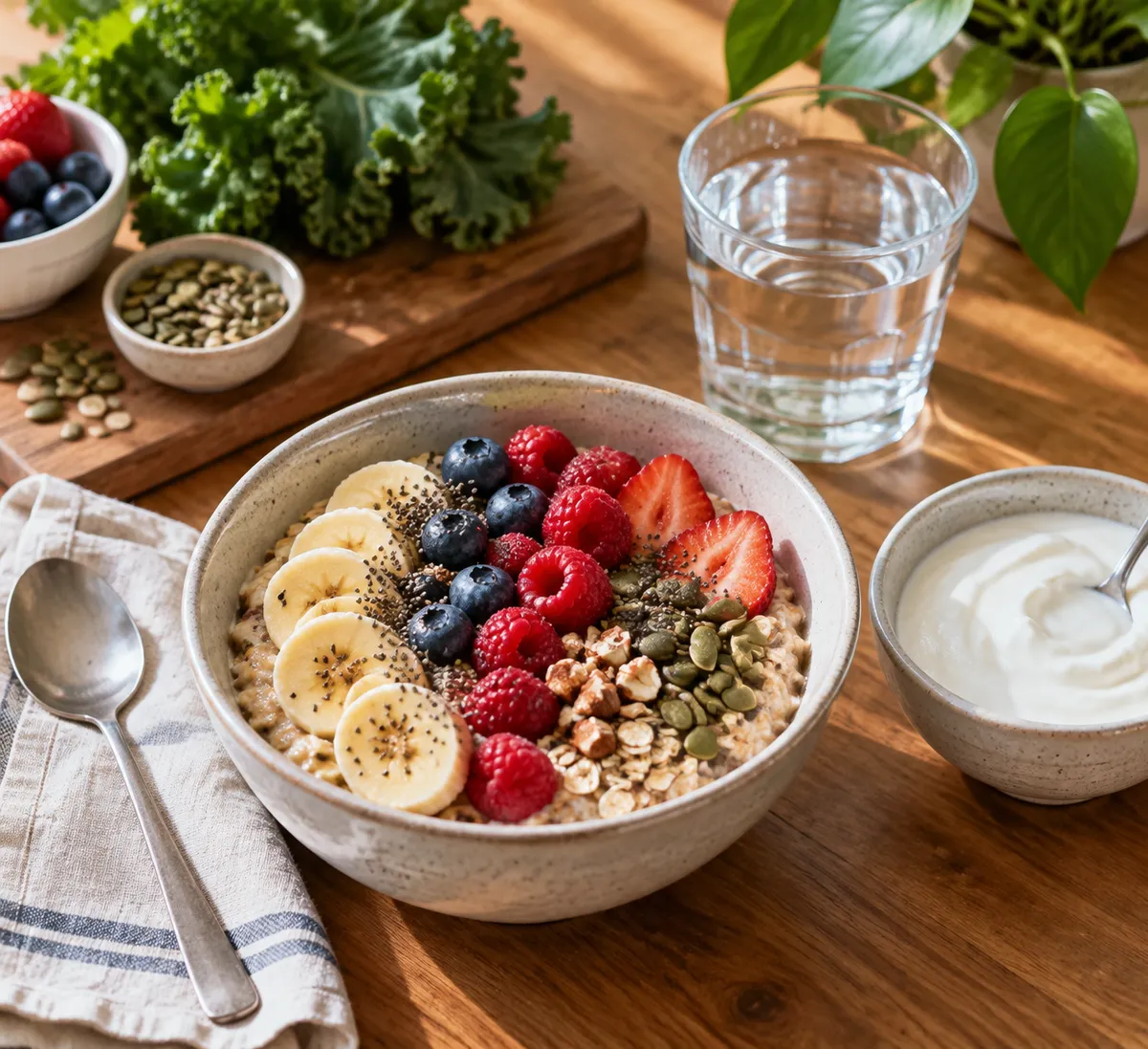
Fruits and vegetables top the list. A practical way to act on this: add one extra serving of produce to the meal you already eat most reliably. Berries on breakfast, a handful of spinach in eggs or pasta sauce, or a side of roasted vegetables at dinner. Small, repeatable additions beat a dramatic overhaul you abandon by Thursday.
2. Prioritize fiber
Fiber is the second habit on the list. Beans, lentils, whole grains, nuts, seeds, and produce are common sources. Some easy swaps:
- White rice for brown rice or quinoa
- Regular pasta for a whole-grain version
- A snack of chips for a handful of nuts or fruit
- Plain toast for whole-grain toast with nut butter
If you currently eat little fiber, it's sensible to increase gradually rather than all at once, and to drink water as you do (more on that below). That's my practical suggestion, not a claim from the source.
3. Get prebiotics, probiotics, and postbiotics
These three terms get blurred together, so here is a plain-language version:
- Prebiotics are food for the beneficial microbes already in your gut. They are typically fibers found in plant foods.
- Probiotics are live beneficial microorganisms, found in foods such as yogurt and other fermented items, and in supplements.
- Postbiotics are the beneficial compounds produced when gut microbes do their work.
The takeaway from Women's Health is that you want all three in the picture, not just a probiotic capsule. A varied, plant-rich diet with some fermented foods covers a lot of ground. If you're considering a supplement, a doctor or pharmacist can help you choose.
4. Get enough B12
Vitamin B12 makes the list as a nutrient worth paying attention to for gut health. Check whether your regular diet includes reliable sources, and if you suspect you're falling short, ask a healthcare provider about testing before reaching for supplements. Guessing is less useful than knowing.
5. Limit ultra-processed foods
This one is about what to crowd out. Ultra-processed foods, such as packaged snacks, sugary cereals, and ready-made meals with long ingredient lists, tend to displace the fiber-rich whole foods your gut microbes rely on. You don't need to eliminate them. A realistic target is replacing one processed item a day with a whole-food version: an apple instead of fruit snacks, or popcorn you pop yourself instead of a flavored bagged snack.
6. Hydrate
Water supports digestion, and it pairs naturally with a higher-fiber diet. Easy ways to make it stick: keep a bottle where you work, drink a glass with each meal, and have one first thing in the morning. Your needs vary with climate, activity, and health, so treat these as habits to build rather than a fixed number to hit.
7. Sleep well
Sleep rounds out the list, and it's the one people forget is a gut habit at all. Consistency is the most doable lever: a regular bedtime and wake time, a darker and cooler bedroom, and screens away shortly before bed. Women's Health includes sleep among the lifestyle factors that support a healthier microbiome, which is a good reminder that gut health isn't only about food.
A simple way to put it together
You don't need to do all seven at once. Here's a low-effort starting plan:
- This week: Add one produce serving and one high-fiber swap to your daily meals.
- Next week: Add a fermented food, and replace one ultra-processed item a day.
- After that: Tighten up water intake and your sleep schedule.
If you have ongoing digestive symptoms, see a healthcare provider rather than relying on lifestyle changes alone. The original piece also touches on how to tell whether your gut needs healing in the first place, which is worth reading if you're unsure.
Start with your next meal
The most effective step is the least dramatic one: at your next meal, add a plant food you don't usually eat. Repeat it tomorrow. Your microbiome responds to what you do consistently, not to what you buy once.