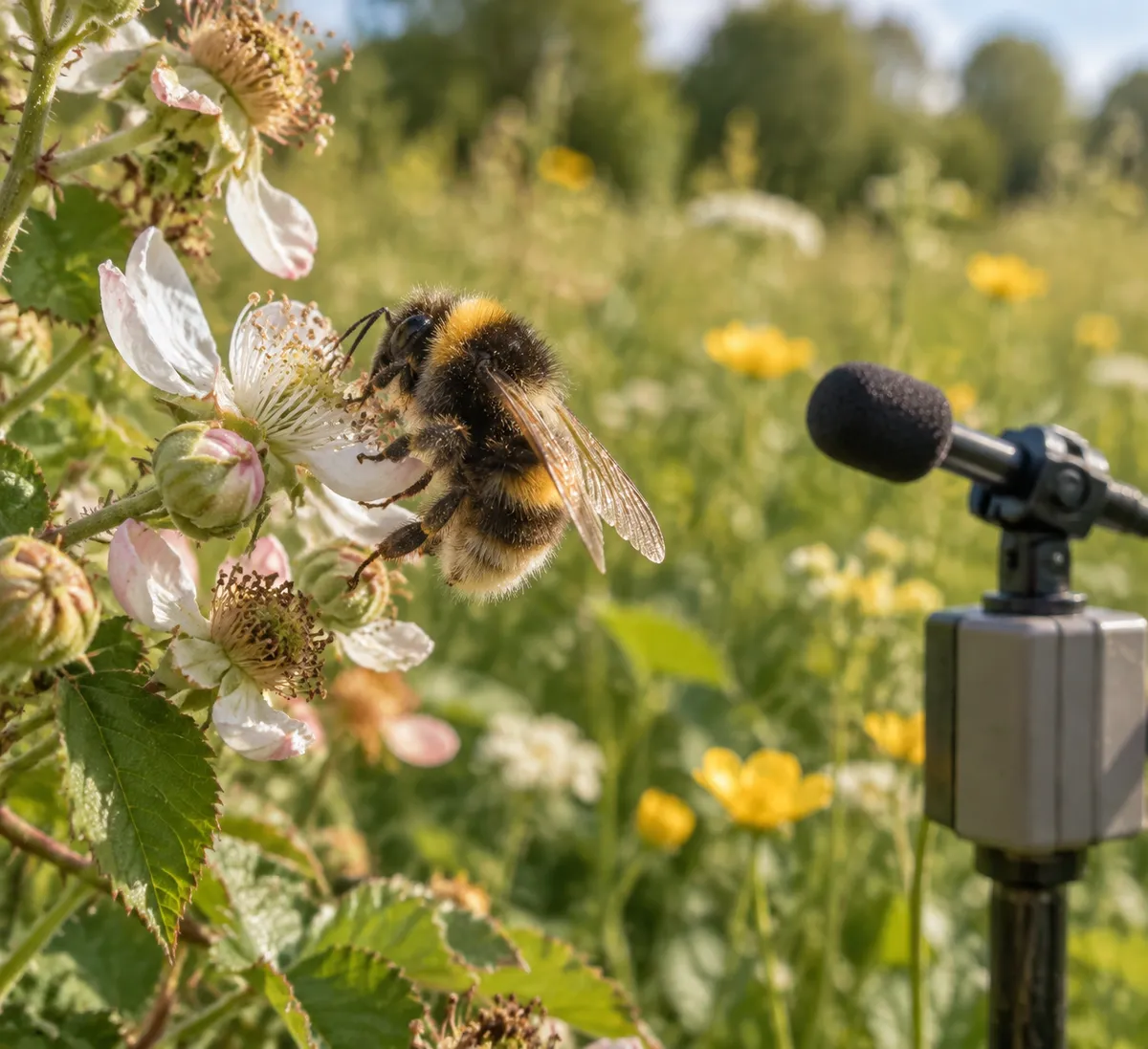
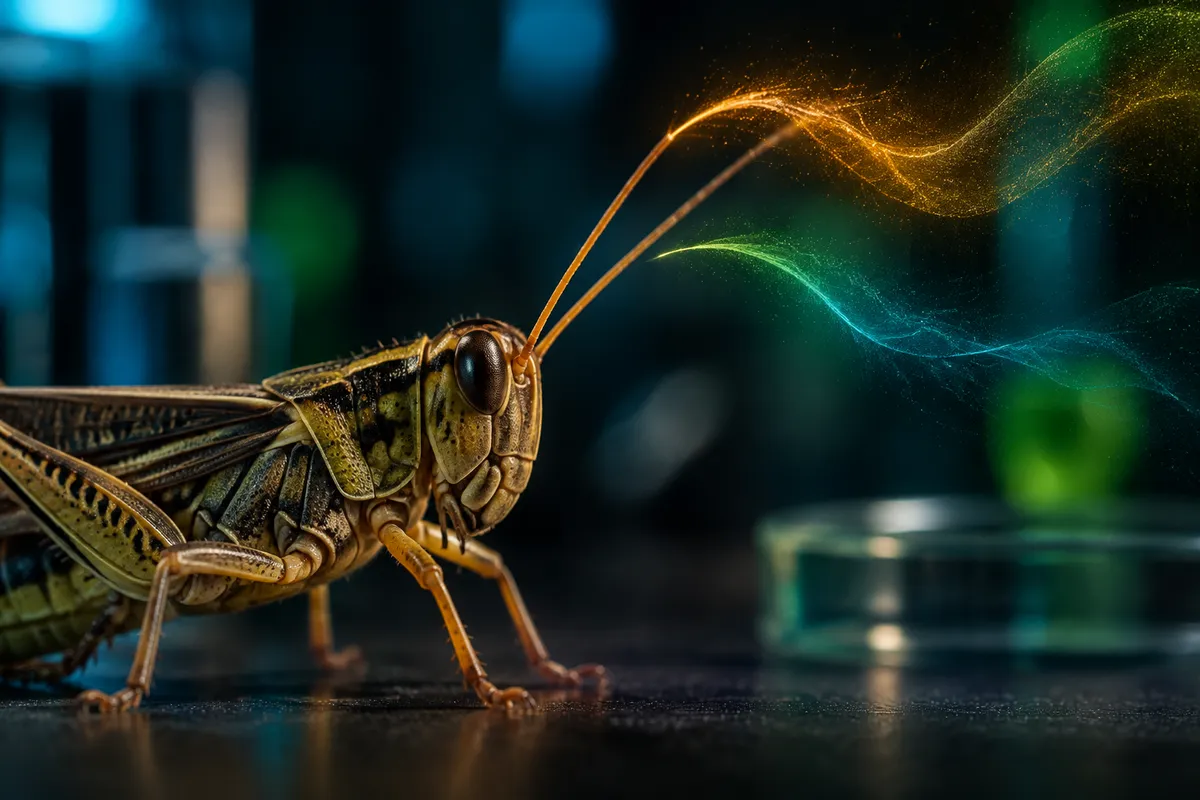
Walk into a bakery and the smell of fresh cookies pulls you in. Eat a handful, and that same smell loses its grip. By the end of this article, you'll know how a locust helps explain that shift, and why the answer lies in brain chemistry rather than in the cookies.
Per a report from Phys, researchers at Washington University studied how two opposing neuromodulators, dopamine and octopamine, change the way locusts process odors and respond to them. The cookie scenario is the hook the report uses to frame the question: how does the brain keep the same smell from meaning the same thing all the time?
The short version: one chemical turns it up, the other turns it down
The team found that the two neuromodulators push in opposite directions:
- Dopamine amplifies odor sensitivity and appetitive behavior, meaning the drive to seek out and approach a smell.
- Octopamine suppresses both.
So the same odor can land very differently depending on which chemical is more active. In this framing, the smell isn't the only thing that decides what an animal does. The brain's internal chemistry sets how loudly that smell registers.
How dopamine does it
The researchers also identified the specific neural mechanism for dopamine's effect. It works by releasing inhibitory local neurons from their own inhibition, which allows stronger odor-evoked responses.
Think of inhibitory neurons as brakes on a circuit. Dopamine doesn't shout louder at the odor-processing network. Instead, it eases off the brakes, so the response to a smell can grow. That's a useful picture to keep: much of what neuromodulators do is adjust the balance between go and stop signals, not simply add more signal.
Why this explains the cookie problem
The cookie example is a familiar case of sensory adaptation: the same stimulus pulls you in at first, then stops motivating you. The study's results point to a plausible reading, and this part is our interpretation rather than a claim from the researchers: when the balance of neuromodulators shifts, the brain's response to an unchanged smell can shift with it. The cookies didn't change. Your internal state did.
That's the larger idea worth taking away. Behavior isn't driven only by what's in the environment. Chemistry inside the brain can raise or lower the value of the same cue.
Why a locust brain is a useful model
Locusts can shift between solitary and swarming behavior through neuromodulation, per the summary of the work. That makes them a striking example of how chemical signaling can reshape what an animal does without changing its surroundings in any obvious way.
It also suggests why researchers care beyond insects:
- Human neuroscience: Understanding how neuromodulators fine-tune perception has implications for how brain chemistry shapes decisions about food and reward.
- Addiction and behavioral control: Systems that turn the volume of a cue up or down are relevant wherever a smell, sight, or taste drives wanting.
- Collective behavior and pest management: Since neuromodulation helps govern the shift between solitary and swarming states, it offers a possible window into how swarms form.
The source does not claim these applications are around the corner. They're the directions this kind of basic research points toward.
What you can take from it
You don't need a lab to use the lesson. Next time a smell stops tempting you, or a craving suddenly gets louder when you're hungry, remember that your brain is adjusting the gain on the signal. The cue is the same; the chemistry around it isn't.
That doesn't make cravings an excuse or a mystery. It makes them something to understand. If you notice that your wanting changes with your state, such as after eating versus before, you're watching the same kind of system the locust study describes.
The next time the bakery smell fades after your second cookie, treat it as evidence: your brain is already doing precisely what these researchers measured in a locust.