A new modeling study from Simon Fraser University estimates that climate-driven wildfires in Canada could cost more than $2.1 trillion over the 21st century if the world warms by 3–4°C, per a report from Phys. By the end of this article, you'll know what that figure represents, why the warming level matters so much, and how to read big climate-cost numbers without getting lost in them.
The headline number, in plain terms
The study's central finding is a comparison of two futures. Under a 3–4°C warming scenario, researchers estimate wildfire impacts in Canada could exceed $2.1 trillion this century. If warming is held to 2°C or less, wildfire impacts could stay closer to recent historical levels, according to the coverage.
The framing is what makes it useful. The number isn't a prediction that this will happen. It's the estimated cost of one path, set against a much cheaper one.
Phys describes the study as among the first of its kind. The researchers' warning is that failing to curb global warming now could leave future generations of Canadians with trillions of dollars in wildfire impacts alone. Note the last two words: that's wildfire only, not floods, heat waves, or other climate effects.
Why 2°C versus 3–4°C is the real story
It's tempting to treat a couple of degrees as a rounding error. The study suggests otherwise.
- At 2°C or less: wildfire impacts could remain near what Canada has recently experienced.
- At 3–4°C: the estimated bill climbs past $2.1 trillion over the century.
That gap is the argument for emissions cuts in economic terms. Rather than asking you to care about forests in the abstract, the research asks you to look at a ledger: one path with manageable damage, one with escalating damage.
What a wildfire "cost" can include
The report details available from the report don't itemize every line of the $2.1 trillion, so I won't invent a breakdown. But it's reasonable to think about where wildfire costs generally land, and that's my own framing, not the study's:
- Smoke and its effects on health
- Evacuations and displaced households
- Damage to forestry and related industries
- Lost recreation and the activities that depend on healthy landscapes
- Insurance and public spending on response
If you want to know exactly which categories the researchers counted, check the published study itself. That's the one detail worth verifying before you quote the figure anywhere.
Why 2023 is the preview
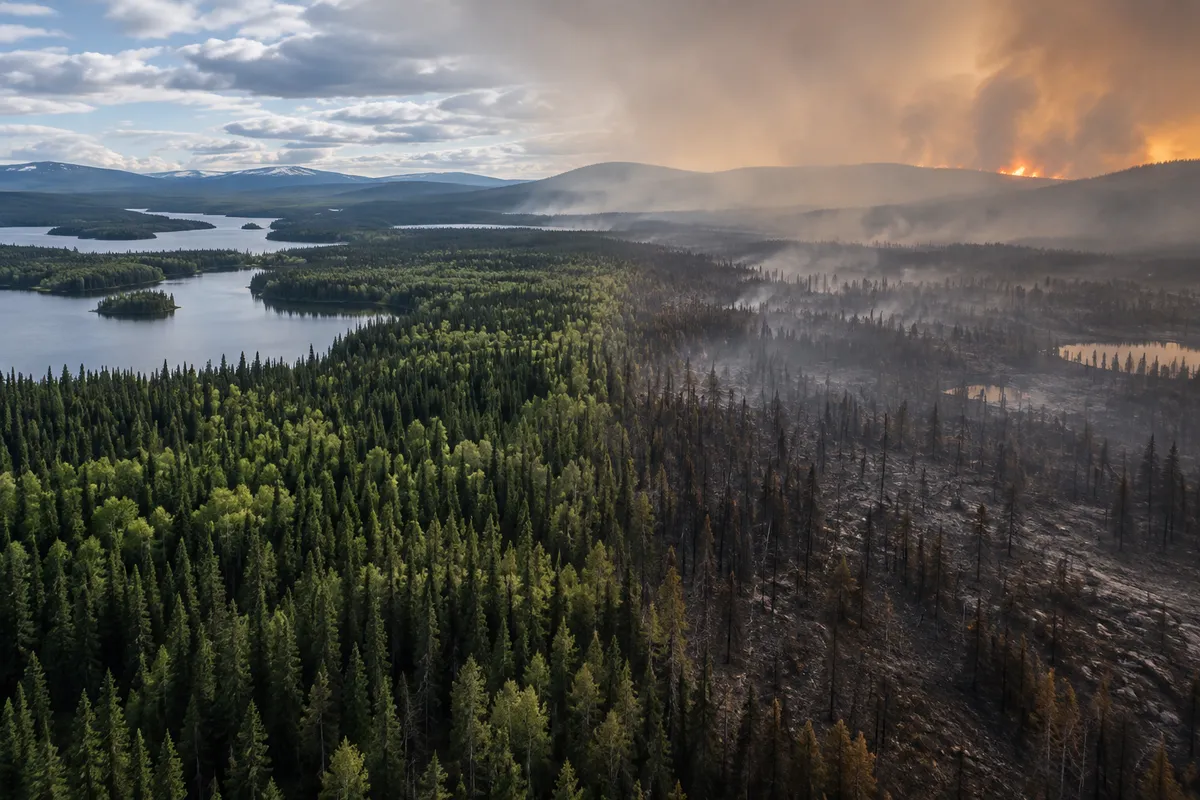
Canada's record 2023 wildfire season is the context for this research. Smoke, evacuations, and climate costs were hard to ignore that year, and this study tries to put a concrete price on what continued warming could mean over decades.
The useful way to read 2023 is as a reference point. If 2°C or less keeps impacts closer to recent historical levels, then the study's worry is about seasons that are meaningfully worse than the ones Canadians have already lived through.
How to read a number this big
A $2.1 trillion figure spread over roughly 75 remaining years is easy to wave off or to panic over. Neither helps. A few habits do:
- Look for the comparison. A cost means little alone. Here, the meaningful part is the difference between 2°C and 3–4°C.
- Check what's included. Totals depend on what the model counts. Wildfire-only estimates may leave out other climate costs entirely.
- Treat it as a scenario. It describes what could happen under a specific warming path, not a guaranteed outcome.
- Notice who pays. The study's emphasis on future generations is a reminder that costs and decisions often land on different people.
Why governments are paying attention to this kind of study
Governments face pressure to justify climate policy through economic risk, not just environmental urgency. A dollar figure gives policymakers something to weigh directly against the cost of cutting emissions. That's the practical role of research like this: it turns "wildfires are getting worse" into a line item that budget offices can compare.
Whether the estimate proves high or low, the direction is the point. My read is that a wildfire-only price tag in the trillions suggests the full cost of unchecked warming is larger still, though the study's authors would be the ones to say how conservative their figure is.
What you can do with this
You don't need to be a policymaker to use the finding. When climate costs come up locally, ask what the cheaper path looks like, not just what the damage looks like. And when you see a headline number, look for the comparison scenario beside it. Here, that comparison is the whole message: hold warming to 2°C or less, and the wildfire bill may stay close to what Canada already knows.