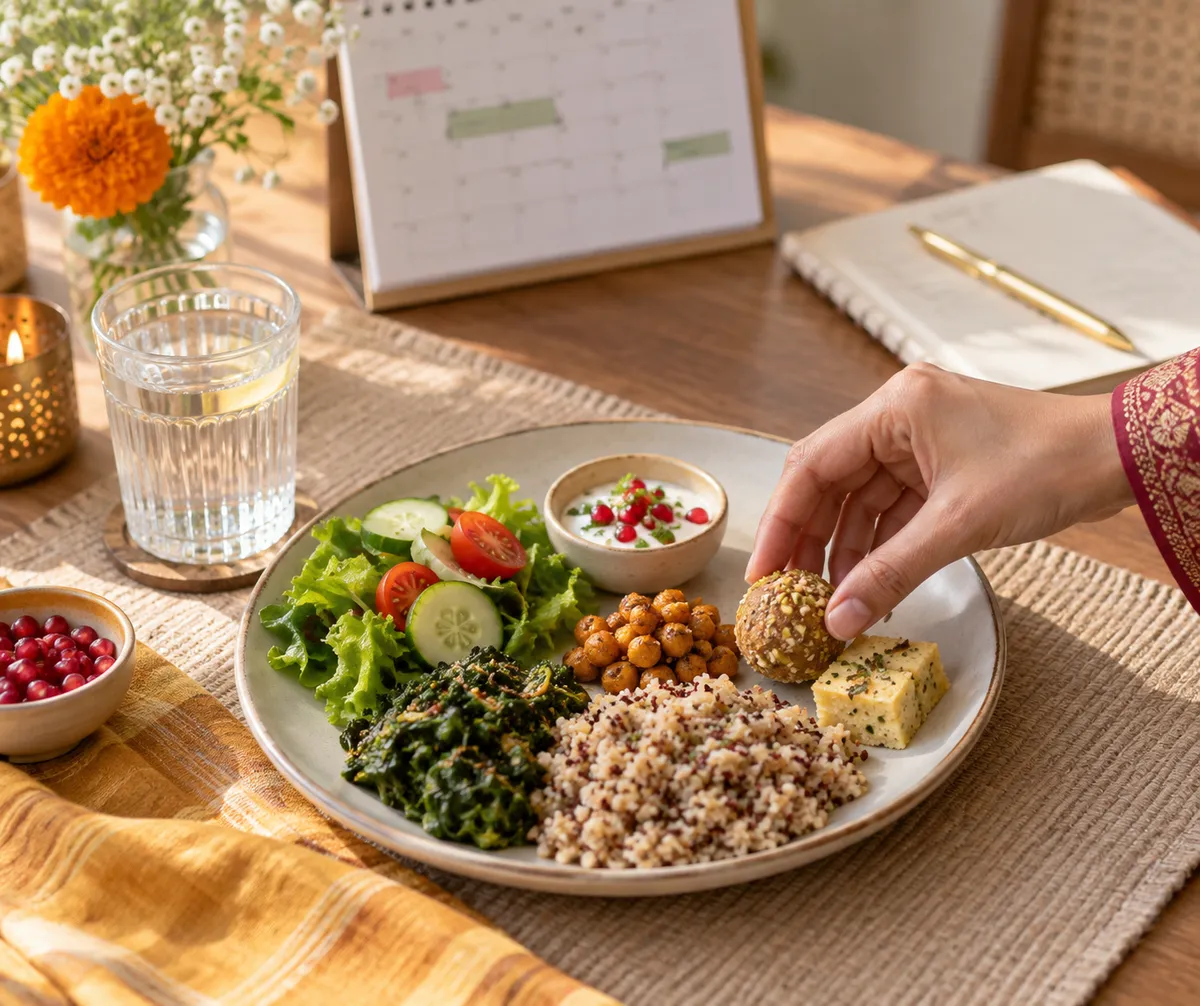
If you're in the middle of IVF while the festival table fills up with sweets, fried snacks, and drinks, you've probably heard the blanket advice: avoid everything. A doctor quoted by Indiatimes takes a different line. The same plate asks something different of each couple, and what matters most for one woman isn't what matters most for another.
By the end of this piece, you'll know which food questions tend to matter for your situation, and why moderation, timing, and personalization beat a long list of bans. This is general information drawn from that reporting, not a substitute for your own clinic's plan.
Start with your situation, not a rulebook
The core message in the Indiatimes report is simple: festive eating during IVF doesn't have to mean giving up celebrations. What it asks for is tailoring. Weight, PCOS, ovarian reserve, endometriosis, implantation history, age, male fertility, and alcohol use all change what deserves your attention.
Find the heading below that sounds most like you. Then bring that question to your fertility team.
When weight is part of the picture
If weight is a factor in your fertility picture, the festive season is a time when portions and frequency count more than any single sweet. The point of the guidance is to avoid a free-for-all without turning every meal into a trial. Ask your doctor what a realistic range looks like for you, then plan which celebration meals you'll fully enjoy and which you'll keep lighter.
When cycles are irregular and metabolism is involved
Irregular cycles often point to a metabolic angle, as with PCOS. For you, the practical question is how heavy sweets and fried foods fit around the rest of your day. A treat doesn't have to be off limits. Pairing it with a balanced meal rather than having it on its own is a sensible conversation to have with your doctor, and the report's broader theme of moderation and timing supports that approach.
When the ovarian reserve is low
Low ovarian reserve is a different concern from PCOS, and the report treats it that way. The takeaway: don't assume advice written for someone else's diagnosis applies to you. If your reserve is low, ask your clinic which nutrition priorities matter most in your case, rather than copying a friend's festive rules.
When endometriosis is in the background
Endometriosis is another condition where one-size-fits-all lists fall short. If you have it, raise festive eating specifically with your doctor, since your priorities may not match those of someone with a metabolic issue.
When earlier transfers have not worked
After a transfer that didn't take, it's tempting to blame every bite. Resist that. Per the report's framing, a history of failed implantation is a reason for individualized guidance, not for guilt. Ask your doctor whether food is even a likely factor for you, and what, if anything, to adjust around your next transfer.
When age is the main clock
If age is the main factor in your treatment, time feels short, and festive stress can make it worse. The approach here is the same: personalized, not punitive. Your doctor can tell you which food choices are worth the mental energy and which aren't, so you can enjoy the rest of the celebration.
Men's health needs the same guidance
Fertility food advice often lands only on the woman. The report makes a point of saying men's health requires the same guidance. If you're the partner, the festive table is your issue too. Eating decisions, and drinking decisions, belong to both of you, and it's easier to stick to them together than alone.
When alcohol is part of the celebration
Alcohol is the one area where the report's advice is firmer. Doctors generally advise skipping it during treatment, per the Indiatimes piece. Festive gatherings bring social pressure to join in, so it helps to have a plan before you arrive:
- Hold a non-alcoholic drink from the start so nobody offers you another.
- Decide in advance, as a couple, what you'll say if someone asks.
- You don't owe anyone an explanation about your treatment if you'd rather keep it private.
Why this approach holds up
Festive seasons bring heavy sweets, fried foods, alcohol, and plenty of opinions, which can clash with the careful routines of fertility treatment. A blanket ban is hard to follow and tends to breed guilt. A situation-based plan is easier to keep because it focuses on the few things that matter for you.
The action to take: before the next celebration, ask your fertility doctor one question, "Given my diagnosis, what actually matters on my plate?" Then enjoy the rest of the feast without apology.