Every fall, monarch butterflies fill up on nectar from Iowa's late-blooming wildflowers and then set off for Mexico. We know they make the trip. What we don't know nearly as well is the route they take or how weather shapes it. By the end of this article, you'll understand how researchers are closing that gap, why it matters for the species' recovery, and what you can do about it from your own yard or phone.
The study: 100 monarchs, one very light tag
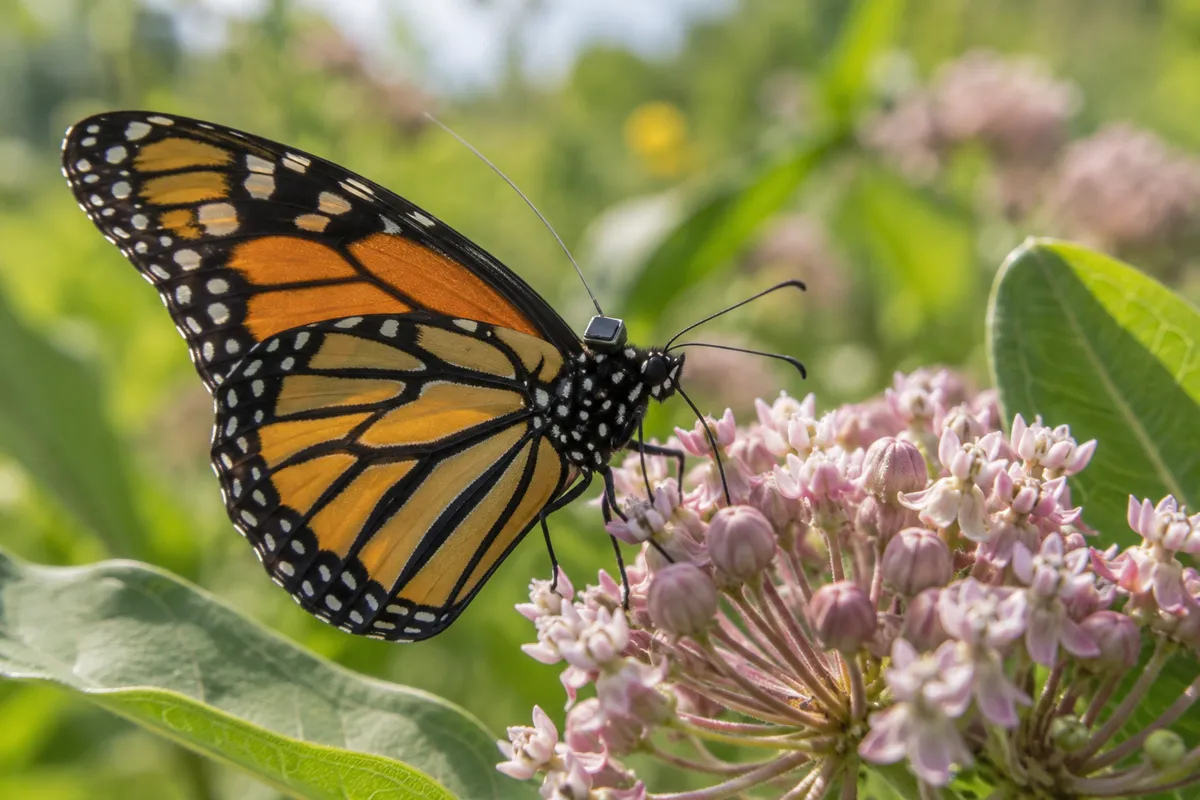
Per a report from Phys, Iowa State researchers are monitoring 100 monarch butterflies on their fall migration to Mexico. They're using BlūMorpho tracking tags, which the report describes as the lightest available. Weight is the whole game with an insect this small: the lighter the tag, the less it should interfere with flight.
The goal is to fill what the report calls critical knowledge gaps: which pathways monarchs actually follow, and how weather affects the journey.
Why this beats the old way of tracking
Research on monarch movement has long relied on wing decals, which only tell you something if someone happens to find the butterfly again. The newer approach uses Bluetooth-enabled tags, which makes closer to real-time tracking possible. That's the shift behind this study: instead of piecing together a migration from scattered recoveries, researchers can follow individual butterflies along the way.
The researchers will also look at how weather affects monarchs during the roughly eight-week trip, something that's hard to measure without knowing where each butterfly is on a given day.
The rearing question: does where a monarch grows up matter?
One of the study's most practical questions involves how monarchs are raised. The team is comparing butterflies reared under different conditions with wild-caught ones, to see whether rearing practices affect survival and navigation.
This matters because many people raise monarchs at home or in classrooms, and there's an ongoing debate about indoor versus outdoor rearing. The study hasn't delivered answers yet, so treat any strong claim on either side with caution for now. But if the tagged butterflies from different backgrounds fly differently or fare differently, conservation advice for hobbyists could change.
Why Iowa is the place to ask
The stakes are high. Per the report, the eastern North American monarch population has declined by up to 80%. The Midwest, and Iowa in particular, is crucial for monarch production, since many of the butterflies that overwinter in Mexico originate there.
Iowa has also put work into the problem: more than 690,000 acres of monarch habitat have been established since 2015, according to the report. Tracking data could show whether that habitat sits along the routes monarchs actually use, which would help guide where to restore next. That last point is my inference, not a stated finding, but it's the obvious payoff of knowing the pathways.
How you can take part
You don't need a research grant to contribute. Based on the report, there are two straightforward ways in:
Plant milkweed on your porch or in your yard
Milkweed is the plant monarch caterpillars depend on, and even a small planting adds habitat. Pairing it with fall-blooming wildflowers gives migrating adults the nectar they need before the long flight south, the same kind of fuel the Iowa monarchs are loading up on.
Use the Project Monarch app
The report points to the Project Monarch app as a way for the public to get involved in monarch research. Download it, see what's being asked of participants in your area, and add your observations to the larger picture.
What to watch for next
The findings to look out for are the actual migration pathways, the weather effects on the eight-week journey, and any difference between reared and wild-caught monarchs. Each one turns a long-standing guess into something conservationists can act on.
Your move this season: put one native, fall-blooming plant or a patch of milkweed where monarchs can find it, and log what you see in the Project Monarch app.