Rising seas are not just a distant problem for ice caps and island nations. They are changing the stretch of sand and mud where you might watch birds on a weekend walk. By the end of this article, you will understand a concept called coastal squeeze, why it matters so much to migratory shorebirds, and what kinds of shoreline decisions help both birds and people.
The backdrop is a review of 37 studies, covered by Phys, that points to widespread risks from sea-level rise for shorebird habitats, survival, and the migration sites birds rely on most.
What coastal squeeze actually means
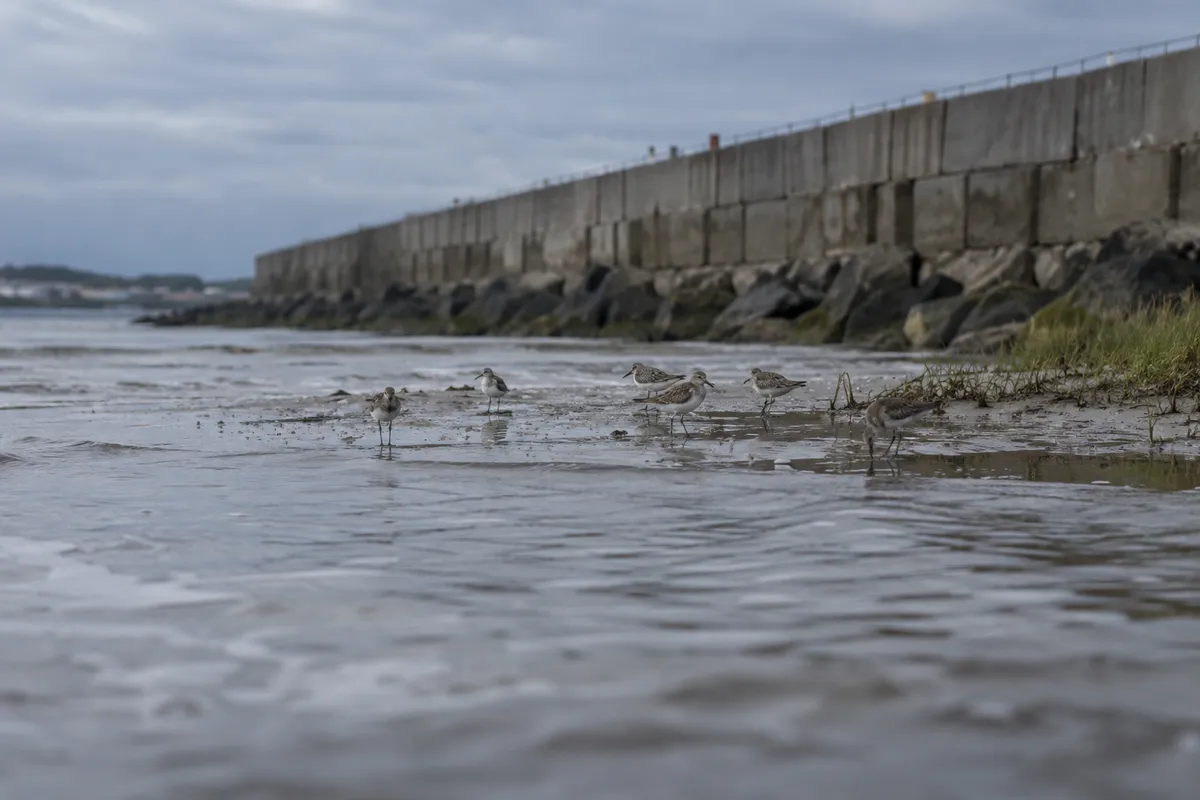
Picture a beach as a strip between two edges: water on one side, buildings or roads on the other. Normally, as the sea rises, a beach, salt marsh, or tidal flat can slowly shift inland. The habitat moves, and the birds follow.
Coastal squeeze happens when that retreat is blocked. Per Phys, climate-driven sea-level rise is shrinking and degrading coastal habitats, and coastal development is converging with it. Water advances from one side, infrastructure holds firm on the other, and the ecosystem gets pinned between them. The strip gets narrower until little is left.
You can picture it with a simple test: stand on a local shoreline and look inland. If there is a seawall, road, or row of buildings right behind the beach, there is nowhere for that beach to go.
Why shorebirds feel it first
Migratory shorebirds depend on beaches, salt marshes, and tidal flats. These are exactly the habitats most exposed to rising water. The review described by Phys found risks across habitat, survival, and migration bottleneck sites.
The timing makes it worse. Phys reports that many shorebird populations are already declining, so rising seas are landing on species with little margin.
Why migration bottlenecks raise the stakes
Long-distance migrants do not spread evenly along their routes. They concentrate at a limited number of stopover sites to rest and feed. Those are the bottleneck sites highlighted in the review.
The practical implication, which is my reading rather than a finding from the report, is that losing one critical stopover could matter far more than losing an equivalent length of ordinary shoreline. A route is only as strong as its weakest link, and a squeezed bottleneck is a weak link for birds that may travel across many regions.
Seawalls versus nature-based protection
The obvious response to rising water is to armor the coast. But a hard wall right at the edge of a beach is precisely the kind of barrier that creates squeeze. The habitat cannot move past it.
Nature-based approaches work with the shoreline instead. Marshes, tidal flats, and beaches, per Phys, do more than host wildlife: they defend human communities, store carbon, and support broader biodiversity. Keeping them healthy is not a trade-off against protecting people. It is part of it.
When you hear about a local shoreline plan, these are useful questions to ask:
- Is there room left for the beach or marsh to move inland?
- Does the plan add hard barriers directly behind existing habitat?
- Are known bird stopover areas considered in the design?
What you can do
You do not need to be a scientist to help.
- Notice your own shoreline. Look at what sits behind the nearest beach or marsh. That tells you whether squeeze is a risk.
- Pay attention to local planning. Coastal development and shoreline protection decisions are often made at the town or county level, and public comment matters.
- Support leaving space. Backing plans that preserve open land behind coastal habitats gives those habitats a path to migrate.
- Give birds room. Keep your distance from feeding and resting flocks, especially at stopover sites where energy is precious.
The takeaway
Shorebirds can adapt to a moving shoreline, but not to a trapped one. Next time a coastal project comes up in your area, ask where the beach is supposed to go. Backing plans that leave it somewhere to go protects the birds, and the people living behind them too.