
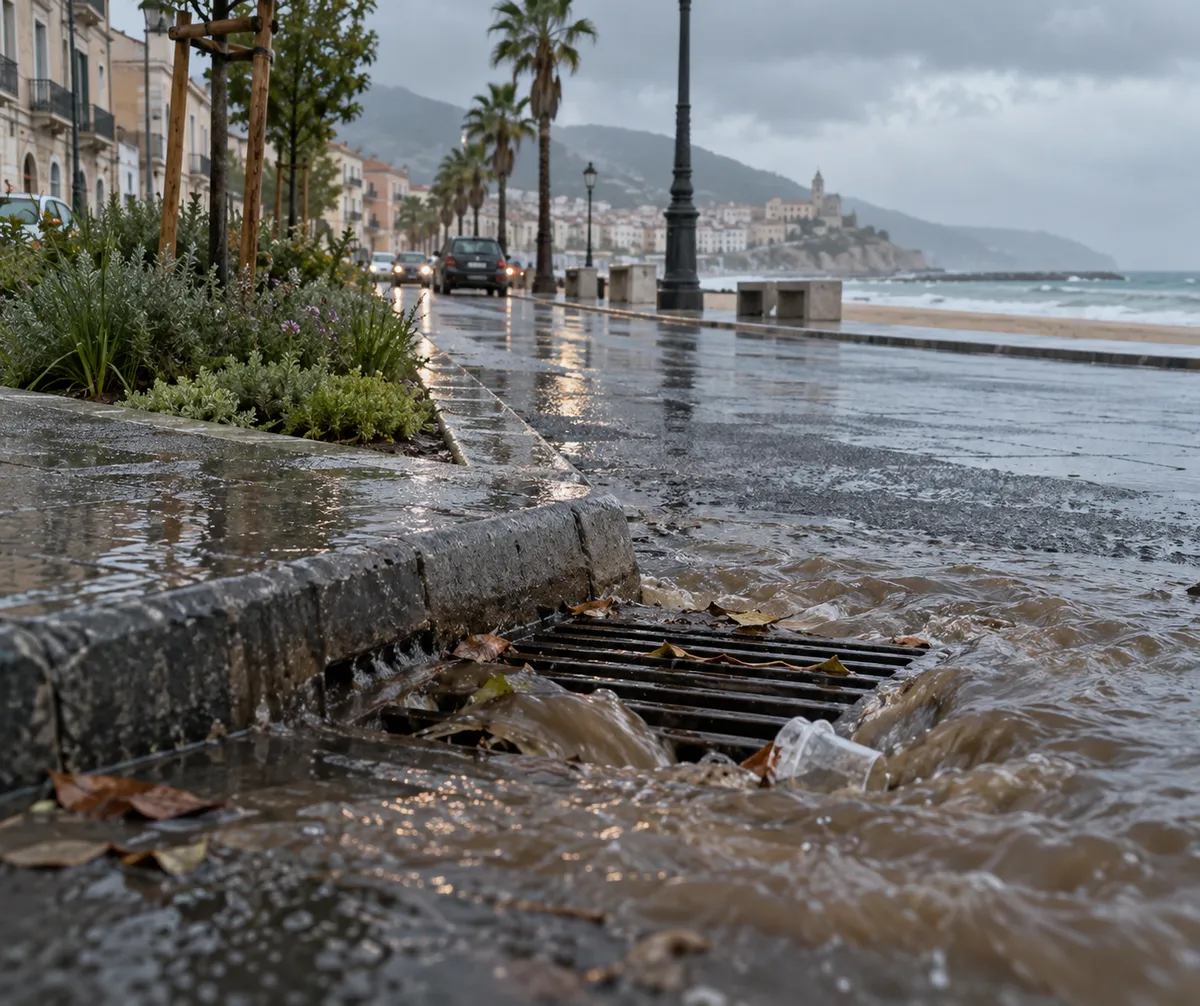
After a heavy rainstorm, many Spanish cities wake up to fresh air and clean-washed streets. It looks like the rain did the city a favor. By the end of this piece, you'll understand why that tidy scene can hide a pollution problem, why it matters for rivers and beaches, and which fixes cities can use to stop it.
The explanation comes from a report originally published by Phys. Its description puts the contrast neatly: the rainwater vanishes into storm drains along with everything it swept away, while underground, a very different story unfolds.
What happens underground when it pours
Many cities use combined sewer systems. Per the Phys report, heavy rain can overwhelm these systems, forcing untreated wastewater and urban pollutants into rivers and the sea.
Here is the logic, in plain terms. In a combined system, household wastewater and street runoff travel through the same network. In normal weather, that's manageable. In a downpour, a surge of rainwater floods the pipes, and the system can run out of room. To avoid backups, the overflow is released, and what gets released is not just rain. It's a mix of rain, sewage, and whatever the water collected from roads and pavements on the way.
That's why "clean rain" and dirty water aren't contradictory. The rain itself starts clean. The city's surfaces and pipes are what dirty it.
Why this is becoming a recurring problem
Extreme rainfall is becoming more common in Spain, according to the report. That turns sewage overflows from a rare accident into a repeated event, with consequences for public health, beach access, and the wider environment.
If you live in or visit a coastal Spanish city, this is the practical link to remember: a big storm can affect water quality after it has passed, because the discharge flows to rivers and then to the sea. Details of specific beach closures aren't covered in the source, so check local health authority notices rather than assuming conditions from the weather alone.
The core idea: stop rushing rain away
The article argues that cities need to change their basic approach. For decades, the goal has been to get rainwater out of sight as fast as possible. The proposed shift is to retain, filter, and reuse it through greener infrastructure.
The logic is simple. If less water reaches the sewers at once, the pipes are less likely to overflow. Slowing and absorbing rain at the surface takes pressure off the whole system.
Fixes that keep sewage out of the sea
The source points to a toolkit of practical measures. Here is what each does:
Storm tanks
These are underground storage spaces that hold surge water during a storm. Instead of overflowing, the system can park the excess and release it gradually once the pipes have capacity again.
Green roofs
Plants and soil on rooftops soak up part of the rainfall before it ever reaches the street or the drains.
Permeable pavement
Surfaces that let water seep through reduce runoff and give rain somewhere to go other than the sewer.
Together these approaches fit the report's broader theme: treat rain as a resource to hold on to, not a nuisance to flush away.
What new EU rules could change
New EU wastewater rules are also pushing cities to monitor discharges and invest in better stormwater management, per the report. Monitoring matters because it's hard to fix what isn't measured. Public data on when and where overflows happen is what lets residents, local authorities, and beachgoers see the scale of the problem. The source doesn't detail the specific requirements or deadlines, so treat this as a direction of travel rather than a timetable.
What you can do
You can't redesign a sewer network, but you can act on what you now know:
- After a major storm, be cautious about swimming in rivers or at beaches near city outlets until local authorities say conditions are fine.
- Ask your local council whether your city monitors overflow discharges and whether it plans storm tanks or green infrastructure.
- At home, if you own a roof, courtyard, or paved patch, softer surfaces and plantings help keep rain from rushing into the drains.
The takeaway: judge water quality by what the city's pipes did during the storm, not by how clean the streets look afterward, and push your local officials to keep rain out of the sewers in the first place.