
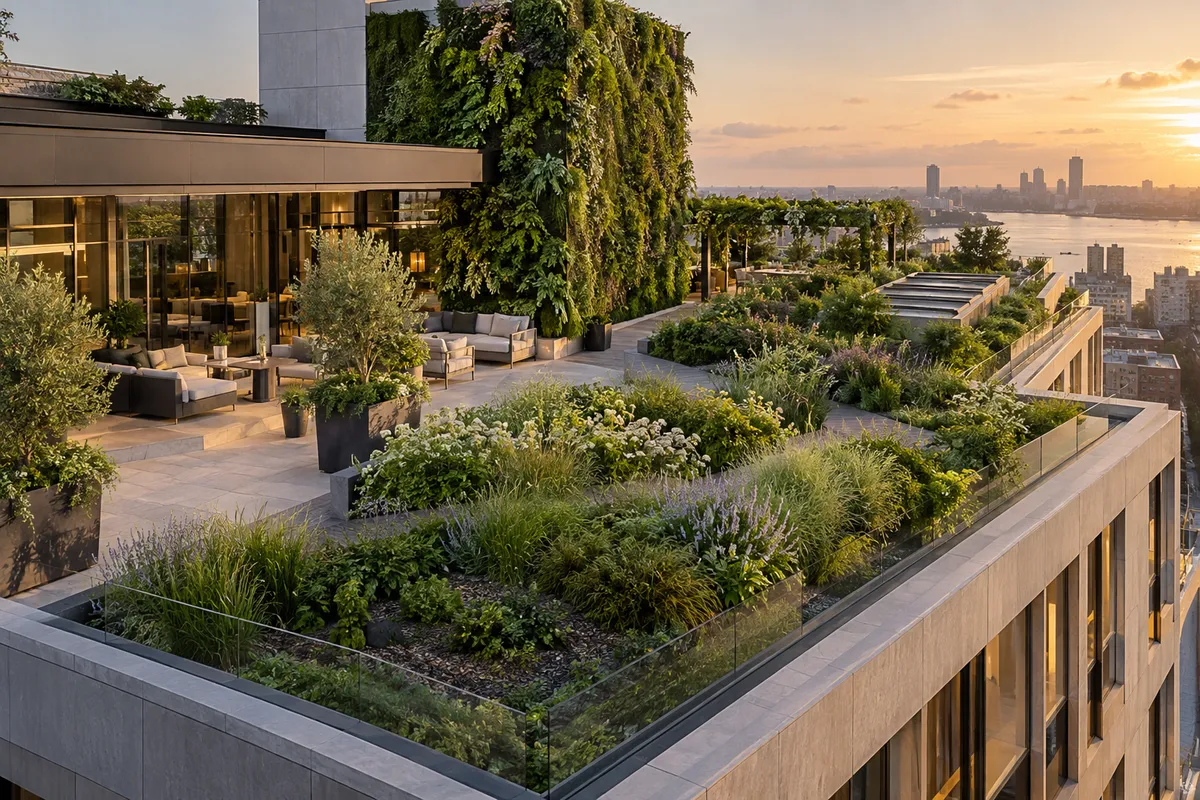
Next time you check into a luxury hotel and notice a wall of living plants in the lobby, you're looking at more than decor. By the end of this piece, you'll understand why hotels are investing in green roofs and living walls, what they hope to get back, and how to spot the difference between real green infrastructure and a pretty backdrop.
The starting point is a Forbes report in which the author interviewed seven hotels about what drove their investment in green roofs and living walls, and what they gained afterward. I can only work from the outline of that reporting, so I won't put numbers or quotes in the hotels' mouths. What follows is the logic the story lays out, plus some practical ways to read it.
The core idea: greenery that does two jobs
Per Forbes, the story frames biophilic design (building nature into the built environment) as both a sustainability move and a guest-experience upgrade. That dual role explains the investment. A plain sculpture or fountain only decorates. A planted roof or wall can decorate and also do environmental work.
For a hotel, that overlap matters. Luxury hospitality is under pressure to show environmental responsibility while still delivering premium, memorable experiences. Green infrastructure lets a property do both in a way guests can actually see.
What hotels are aiming to get back
The reporting points to several kinds of return. Think of them as a ledger with two columns.
Behind the scenes
- Less heat. Green roofs and living walls are a way to reduce heat on and around a building.
- Biodiversity support. Planted surfaces can give habitat to species that a bare roof never would.
- Brand value. Visible environmental commitment can strengthen how a brand is perceived.
In front of the guest
- Differentiation. A living wall is memorable in a way a standard lobby isn't, which is why some describe it as a new hospitality status symbol.
- Atmosphere. Plants change how a space feels, which fits the premium experience guests are paying for.
The interesting shift, as I read it, is that green features are moving from aesthetic trend toward business strategy. The beauty is the hook. The return on investment is the reason it stays.
Why luxury, specifically?
Higher-end hotels have two things budget properties often lack: guests who expect a distinctive experience, and brands that live or die on reputation. When sustainability claims are scrutinized, a visible, physical feature is harder to dismiss than a line in a press release. That's analysis on my part, not a claim from the Forbes piece, but it's a sensible reading of why the trend shows up at the top of the market.
How to judge a hotel's greenery as a guest
Not every plant installation is equal. A few practical checks, based on the logic above:
- Ask what it does. A hotel that treats a roof or wall as infrastructure should be able to tell you its purpose, such as cooling or habitat, not just that it looks nice.
- Look beyond the lobby. A single feature wall is a start. Roofs, which guests rarely see, are where much of the environmental work happens, so ask whether the property has one.
- Check the plants. Healthy, maintained greenery suggests ongoing commitment. Brown patches suggest the feature was an afterthought.
- Notice what else the hotel shares. Green features are most credible when they sit alongside other disclosed sustainability efforts.
These are my suggestions for evaluating claims, not findings from the seven hotels.
What this means if you're not a hotelier
The same principle scales down. Green roofs and living walls work because surfaces that were once purely functional become useful and pleasant at once. If you're weighing a similar idea for a home, office, or small business, the lesson from the hotel world is to define the job first: cooling, habitat, atmosphere, or brand. Then judge the plants by how well they do that job.
The takeaway
When you see greenery in a luxury hotel, ask what it's doing besides looking good. The best examples are earning their keep on both sides of the ledger, and the question is a simple way to tell them apart from the ones that are just for show.