Soil is easy to ignore because it's under your feet, but a new report suggests we're losing it far faster than nature can make more. By the end of this piece, you'll know what the report says, what the loss has already cost in one of the world's richest farming regions, and which practices are most often named as ways to slow it.
What the report says
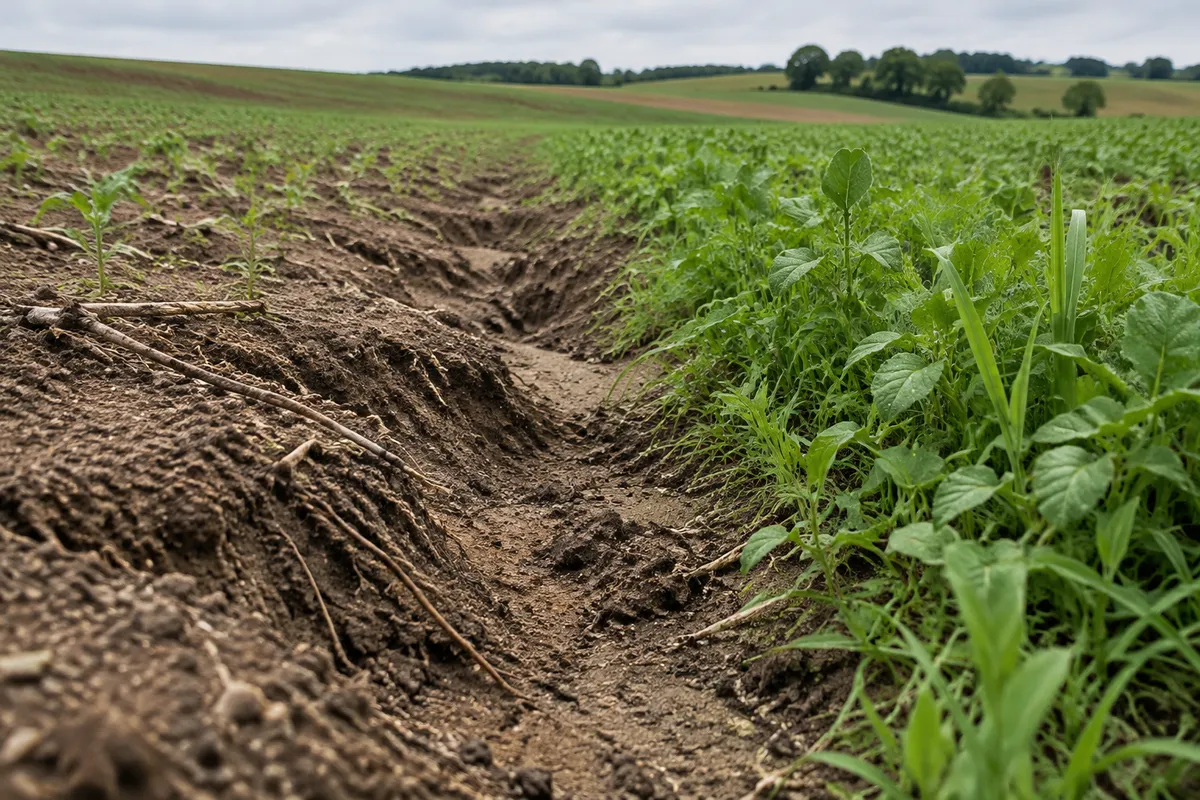
A new report from the UN Food and Agriculture Organization (FAO), covered by Phys, warns that global soil erosion is happening much faster than natural soil formation can replace what's lost. Research cited in the coverage indicates that agricultural practices are degrading soils unsustainably across multiple regions.
Think of soil like a bank account with a tiny deposit rate. Nature builds new soil slowly. When wind and water carry it away faster than it's rebuilt, the balance only goes one direction.
The price tag in the Corn Belt
The clearest number in the coverage comes from North America's Corn Belt, where erosion has reportedly already cost $2.8 billion annually in lost crop yields.
That figure matters because the Corn Belt is not a marginal farming area. If a region that productive is losing that much value every year, it's reasonable to ask what happens in places with thinner, more fragile soils. That question is my own inference, not a finding from the report, but it's the natural one to ask.
Why you should care even if you don't farm
Per the coverage, soil degradation threatens three things most people do care about:
- Food security. Less productive soil makes it harder to grow food just as global demand is rising.
- Water quality. Soil that washes away has to go somewhere, and the report links degradation to water concerns.
- Climate resilience. Degraded land is less able to cope as climate pressures intensify.
The cost of lost yields doesn't stay on the farm. It's reasonable to expect it to show up eventually in what food costs and how stable supplies are, though the coverage frames the stakes mainly in terms of security and resilience.
The gap between knowing and doing
One of the report's sharpest points, as summarized by Phys, is a gap between what science knows about sustainable soil management and what farmers actually practice. The methods aren't a mystery. They just aren't being used widely enough.
The coverage doesn't spell out every reason for that gap, so it's worth being careful here. Changing how you farm takes equipment, knowledge, and a willingness to take on risk, and it's plausible that cost and policy play a role. But that's speculation on my part, not something the report is quoted as saying.
Practices that can slow the loss
The two solutions highlighted in the coverage are ones you can picture easily:
Cover crops
Instead of leaving fields bare between harvests, farmers plant something to keep roots and green growth in place. Bare soil is exposed to rain and wind. Covered soil is held together.
Reduced tillage
Tilling breaks up soil and leaves it vulnerable. Cutting back on it keeps the soil structure more intact, so less of it is carried away.
Neither is exotic. Both are described as steps farmers can adopt today.
What you can do as a non-farmer
You can't plant a cover crop on a Corn Belt field, but you can use the information.
- Ask where your food comes from. If you buy from local farms or farmers' markets, ask whether they use cover crops or reduced tillage. Most farmers are happy to talk about it.
- Pay attention to land policy. Because the knowledge-to-practice gap is a central theme of the report, the rules and incentives around farming matter. Notice when they come up in your local or national politics.
- Protect your own patch. At home, the same logic applies on a small scale: don't leave garden beds bare for long, and avoid unnecessary digging.
The takeaway
Soil takes a long time to build and a short time to lose, and the fixes already exist. The most useful thing you can do is treat soil as a resource worth asking about: next time you talk to someone who grows your food, ask what they're doing to keep it in place.